Two Fed Rate Cuts Are Likely This Year, Governor Says
Key Highlights
- A Federal Reserve governor has revealed that it is realistic to think of two more rate cuts this year
- His announcement sparked euphoria in the cryptocurrency market, which is currently facing turbulence
- After the U.S. President Trump announced a tariff on China, the cryptocurrency market witnessed a sharp fall, dipping Bitcoin’s value below $102,000
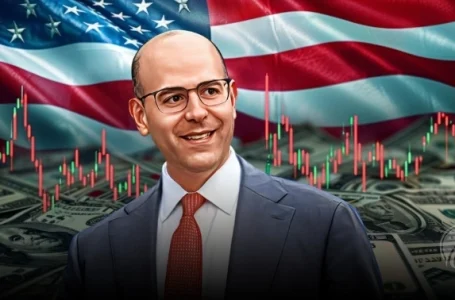
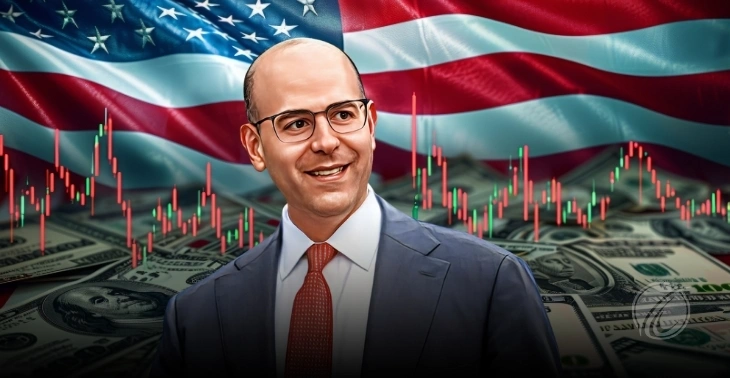
On October 15, Federal Reserve Governor Stephen Miran sparked euphoria in the finance world after he said that two more rate cuts this year are realistic.
JUST IN: 🇺🇸 Fed Governor Stephen Miran says two more rate cuts this year are realistic. pic.twitter.com/AmnPxdDq0c
— Crypto India (@CryptooIndia) October 15, 2025
This news has also attracted the attention of the cryptocurrency market, which is currently juggling to regain its lost upward momentum. Last week, the cryptocurrency market suffered a massive and abrupt crash after U.S. President Donald Trump announced a fresh tariff on China.
On Friday, Bitcoin faced a sharp fall from $122,000 to as low as $102,000 within hours. Trump’s announcement of a 100% tariff on China wiped out over $19 billion in leveraged positions last Friday.
The sharp fall in Bitcoin has also triggered a domino effect in the other cryptocurrencies, proving its correlation.
How Crypto Market Reacts to Fed Rate Cuts
When the U.S. Federal Reserve cut interest rates, the cryptocurrency market gave mixed reactions. For example, after the Federal Reserve announced interest rate cuts on September 17, the crypto market again gave mixed reactions. The price of Bitcoin and Ethereum did not change much at first because most traders were already expecting the cut.
However, in the long run, this is great news for crypto. Lower rates make it cheaper to borrow money, which tends to push investors toward riskier assets like Bitcoin and Ethereum. Many experts believe this could fuel a major rally, with some predicting Bitcoin could reach $130,000 by the end of the year.
Also, Bitcoin hovered around $115,000 – $116,000 post-announcement. This shows muted volatility as traders have priced in the move with over 90% probability. Overall market cap rose modestly by 2%, following an 8% pre-cut surge.
Longer-term, the easing boosts liquidity, weakening the dollar and fueling risk appetite for assets like BTC and ETH.
Crypto Market Faces Despite Boom In its Mainstream Adoption
Over the years, the cryptocurrency’s adoption has grown gradually. Since Donald Trump took office in January 2025, cryptocurrency has moved from a niche interest to a central part of U.S. financial policy, speeding up its adoption like never before.
Trump’s pro-crypto approach started immediately. He fired the SEC’s head, Gary Gensler. He was known for strict enforcement and was replaced with someone supportive of the industry, Paul Atkins.
He also reversed restrictive policies under his second term. An early executive order overturned old, restrictive rules and created a new government group to guide the “responsible growth” of blockchain technology.
The U.S. government began stockpiling Bitcoin by creating a “Strategic Bitcoin Reserve” that it had seized, treating it as “digital gold” to strengthen national finances.
The first significant crypto laws were passed. The GENIUS Act regulates stablecoin, which could cause the market to grow enormously. The CLARITY Act reduced the SEC’s power over Bitcoin and Ethereum. This will provide oversight to the more friendly CFTC, and also ban the U.S. Central Bank Digital Currency (CBDC) to encourage private sector innovation.
Major financial institutions are now deeply integrating cryptocurrency into traditional finance, with JPMorgan Chase using its own blockchain platform to process billions in daily transactions and offering instant international payments via stablecoins.
Banks like Citi, Bank of America, and Wells Fargo are exploring a joint stablecoin and expanding crypto services such as custody and trading, while payment networks like Visa and Mastercard are embedding blockchain technology into their systems.
Supported by new, clearer banking regulations that have made engaging with crypto safer, this new model combines decentralized finance (DeFi) with the trust of traditional finance.

Rajpalsinh is a crypto journalist with over three years of experience and is currently working with CryptoNewsZ. Throughout his journey, he has honed skills like content optimization and has developed expertise in blockchain platforms, crypto trading bots, and hackathon news and events. He has also written for TheCryptoTimes, where his ability to simplify complex crypto topics makes his articles accessible to a wide audience. Passionate about the ever-evolving crypto space, he stays updated on industry trends to provide well-researched insights. Outside of work, gaming serves as his stress buster, helping him stay focused and refreshed for his next big story. He is always eager to explore new blockchain innovations and their potential impact on the global financial ecosystem.